
What Is the IRL Advantage and How Can Brands Earn It? Inside Kantar’s New Whitepaper
November 5, 2026
It’s a frustrating time to be a brand marketer. It’s become a challenge for once-dependable channels to deliver the engagement and conversions they used to. What’s behind the trend?
In a word: trust.
The rise of artificial intelligence has created an environment where consumers’ default stance is doubt and suspicion. 93% now question whether the content they encounter online is AI-generated. That stunning statistic is one of the most talked-about takeaways from Kantar’s new whitepaper, The IRL Advantage: The Role Physical Media Plays in an Agentic World, commissioned by OUTFRONT. Kantar’s research – based on qualitative focus groups, deep-dive interviews, and a survey of 2,000 U.S. consumers aged 18 to 64 in 11 major metro markets – explores how media channels differ in their ability to build trust, credibility, and preference, and charts a path forward for brands that want to break through: and that path is found in real life via out of home advertising.
Here are the key takeaways from Kantar’s The IRL Advantage.
1. Doubt is the new default.
Advertising used to prompt its audience to ask “is this product for me?” But in the age of AI, the question has become “is this even real?” AI-generated deepfakes. Voice cloning. Fabricated testimonials. Manipulated product images. AI-generated falsehoods have even made their way into legal briefs. It’s no wonder we’re skeptical of everything we see online. While algorithm-targeted advertising can feel intrusive, AI-generated content inherently feels like someone is trying to deceive you.
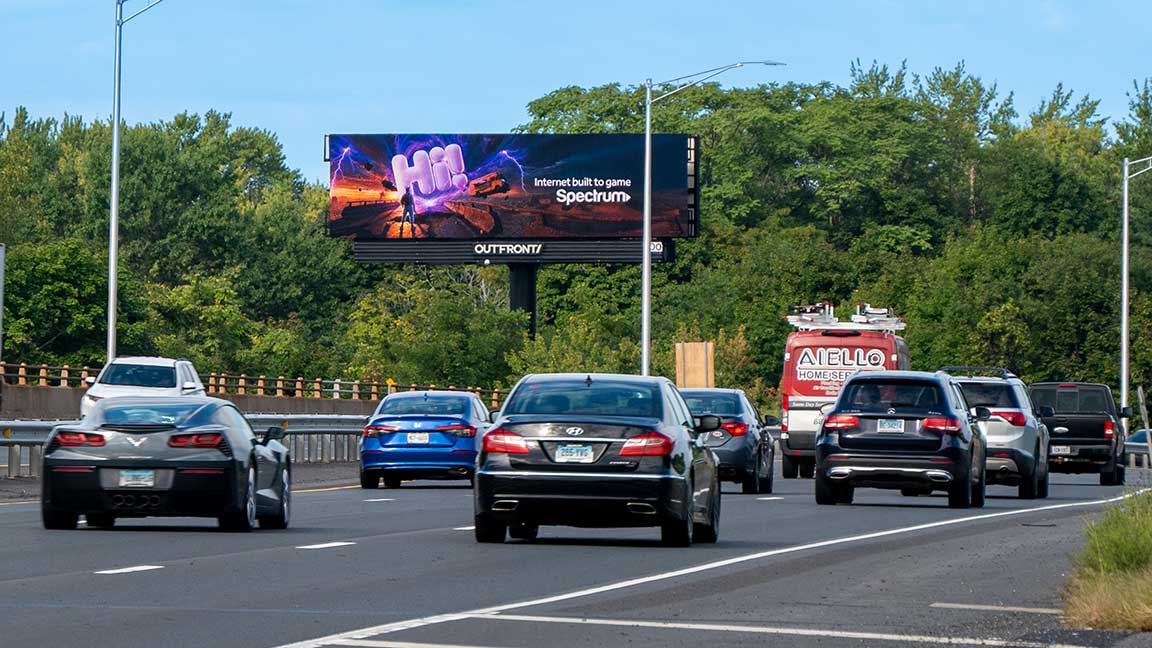
The proliferation of suspicious content is – perhaps unsurprisingly – most severe on social media platforms. 32% of consumers rank them as the medium where they’re most likely to see AI-generated, fake, or misleading material. So where can consumers let their guard down? Just 9% named billboards and outdoor advertising.
2. Reality is becoming more valuable.
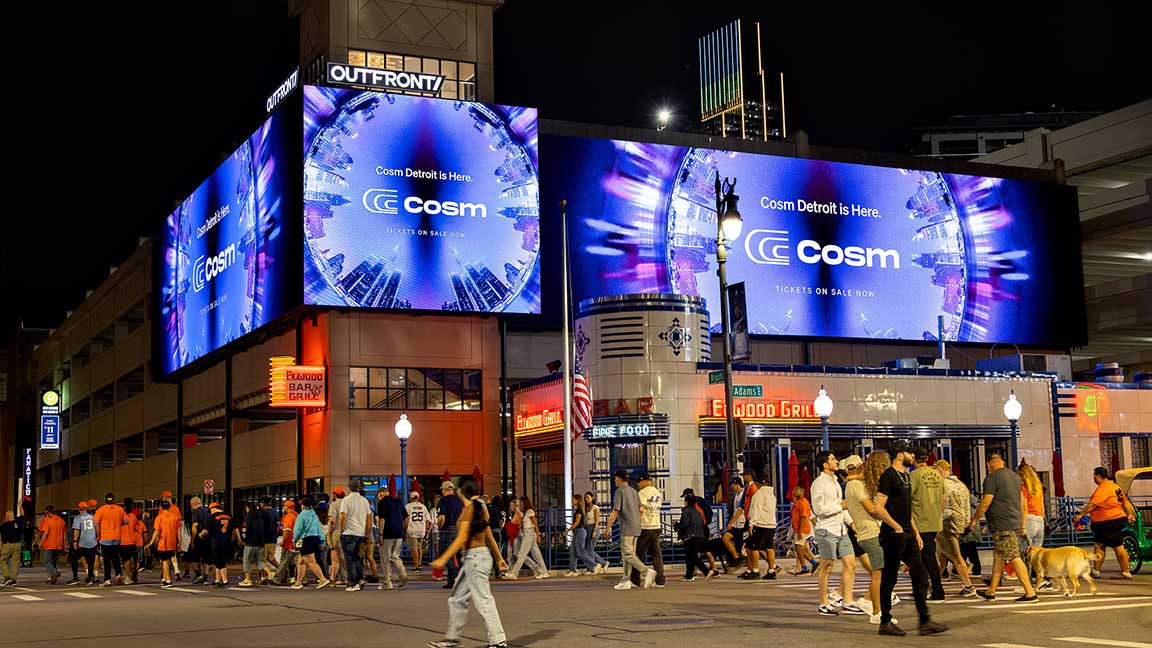
It’s exhausting having your guard up all the time, and consumers are responding to the constant anxiety by putting their devices away and rediscovering the joys of the real world. Nearly 8 in 10 Gen Z and Millennials say they’ve sought out more real-life experiences in the past year. But it’s not just them. 66% of Gen X and 61% of Baby Boomers say the same thing.
But trust isn’t the only reason online has lost its luster. Algorithmic existence makes it all feel more synthetic, more siloed, less spontaneous. But no man is an island, and as social creatures, we gravitate towards real-life, filter-free experiences that feel authentic, human, and shared. “Going to an event or just being out in the city feels like coming up for air,” said one survey respondent. “You realize how much you miss just being in an actual place with actual people.”
Those actual places with actual people run the gamut. Book clubs, concerts, cultural outings, church attendance, and local festivals are all seeing increased attention and cultural relevance, because they’re not just things to do. Real-life activities represent a vector for connection, discovery, and surprise. And as such, real life represents a big opportunity for brands.
3. Physical presence carries meaning.
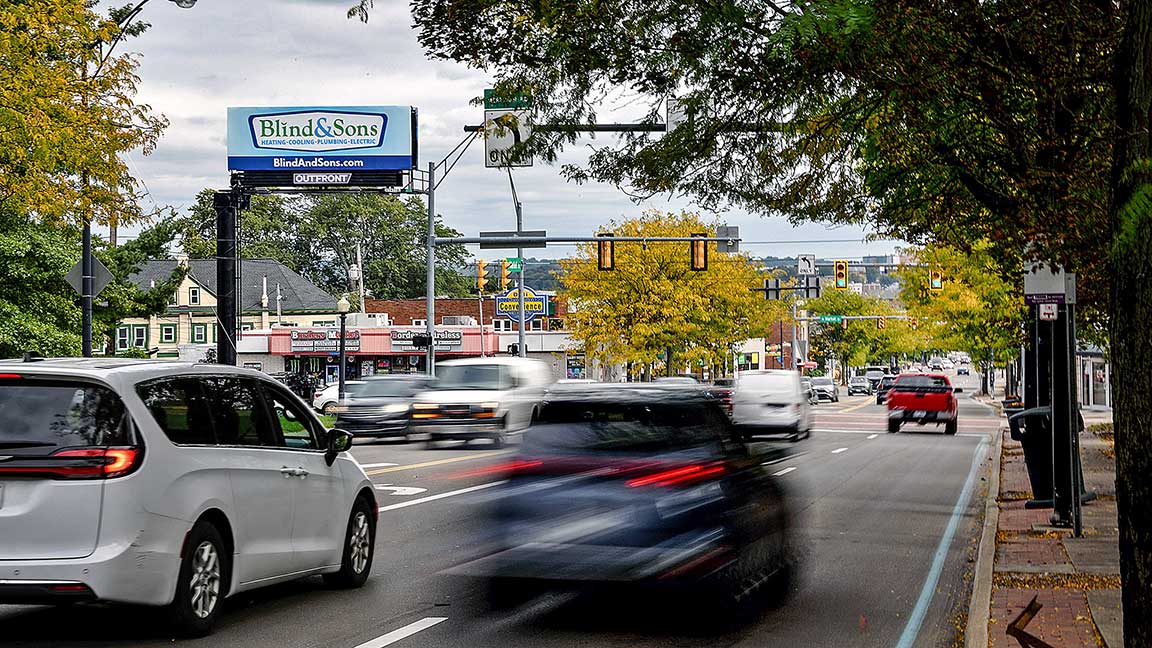
The difference between running an ad in real life and on consumer devices is more than just the media format. It’s what the choice communicates. When a brand has a physical presence in the communities it serves, it’s a signal that the brand actually cares about the place where it finds its customers, that it’s credible, and that it’s here to stay. On the other hand, AI-generated advertising signals low effort and lack of seriousness. “It feels like cutting corners,” one respondent said, “and it comes across as cheap.”
Across age groups, consumers are more likely to believe advertising they can see in person than advertising that only exists on a screen, including 80% of Millennials, 77% of Gen Z, 72% of Gen X, and 66% of Boomers. And ultimately, that physical presence translates to preference, trust, and credibility.
Interactive brand experiences are the gold standard when it comes to all three, ranking first in preference (88%), trust (85%), and credibility (89%). Out of home advertising/IRL media are close behind, at 78%, 72%, and 75%, respectively. Online advertising brings up the rear, garnering just 62% preference, 54% trust, and 58% credibility.
It’s simple: brands that want to be taken seriously show up in real life.
4. Brand media plans need a “Physical Layer.”
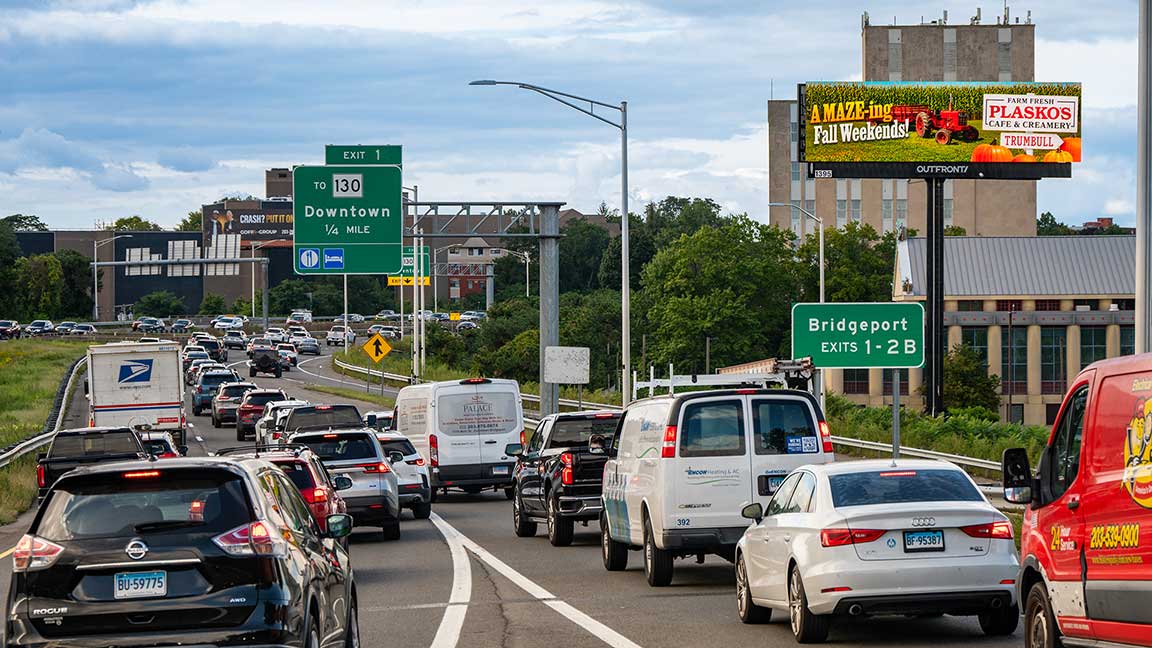
The Physical Layer of a media plan is the part that lives in the real world. It’s the layer that people can see, experience, and verify in the real world. The layer can include both assets such as billboards, wallscapes, transit ad formats, and street furniture and experiences such as interactive brand activations and in-store popups.
That Physical Layer can strengthen how consumers view the whole campaign. When OOH runs alongside online or TV advertising, 74% of consumers rate the brand as trustworthy and credible; a majority of consumers say that their trust in a brand grows when that brand has a multi-channel physical presence.
Part of Kantar’s research included showing respondents the same ad on both social media and on billboards and asking them to rate the two. Compared to social media, billboards were rated as more authentic (71% vs. 29%), more credible (70% vs. 30%), more believable (69% vs. 31%), more trustworthy (67% vs. 33%), and more relevant (60% vs. 40%).
Kantar also asked what advertising in the real world says about a brand. The top three responses were that it has the confidence to be seen and judged (41%), that it’s established and legitimate (39%), and that it’s committed to being a part of the real world (38%).
5.The Physical Layer can build brand trust, create shared experience, and support other media.
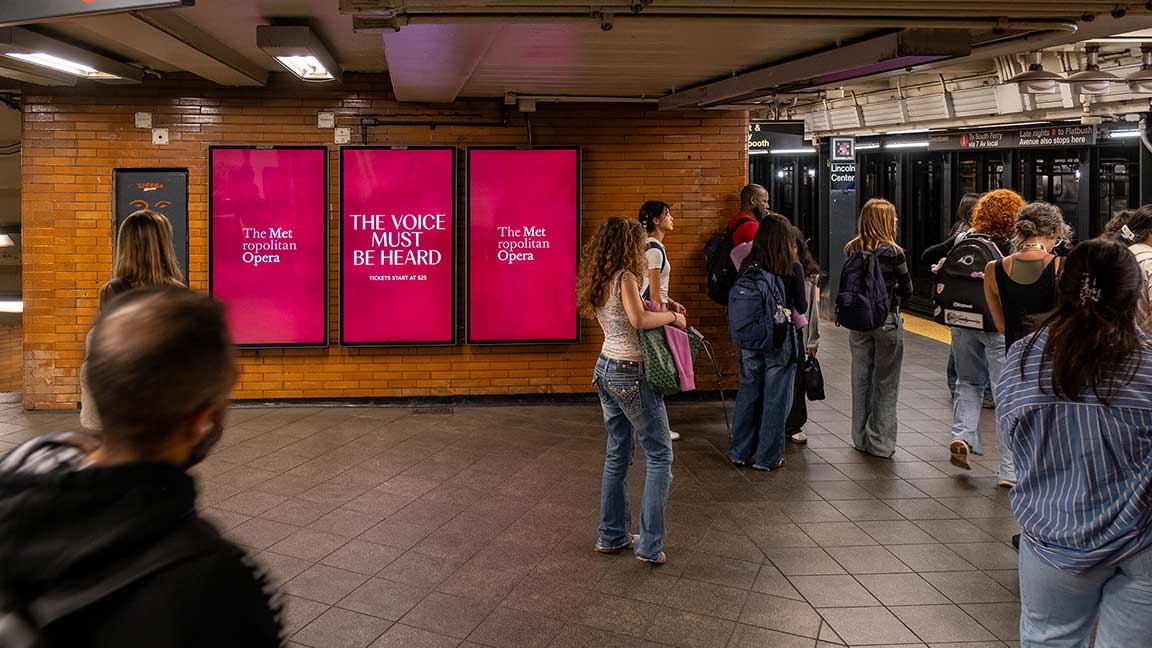
A Physical Layer adds value for brands in three different ways.
First, it can make them feel more trusted and more real. 60% agreed that brands they encounter in real life “feel more like part of real life” than ones solely found online. A brand showing up in your neighborhood, at a local event, hits differently than seeing it on the feed.
Second, it makes brands more shared. Our algorithms atomize our experiences. But everyone driving past the same billboard sees the same ad. The brand becomes something we have in common. The ad becomes part of our shared vernacular. And that’s a powerful differentiator in a world where 57% believe that technology has made us more isolated.
Finally, and perhaps most importantly for brand marketers, a Physical Layer can help other media formats work harder. The trust earned in real life can carry over to other places a consumer encounters the brand. A majority say that multi-channel amplification makes them trust the brand more (53%) and view it more credibly (59%). That impact can extend across the media plan.
6. IRL media doesn’t compete with digital channels, it complements them.
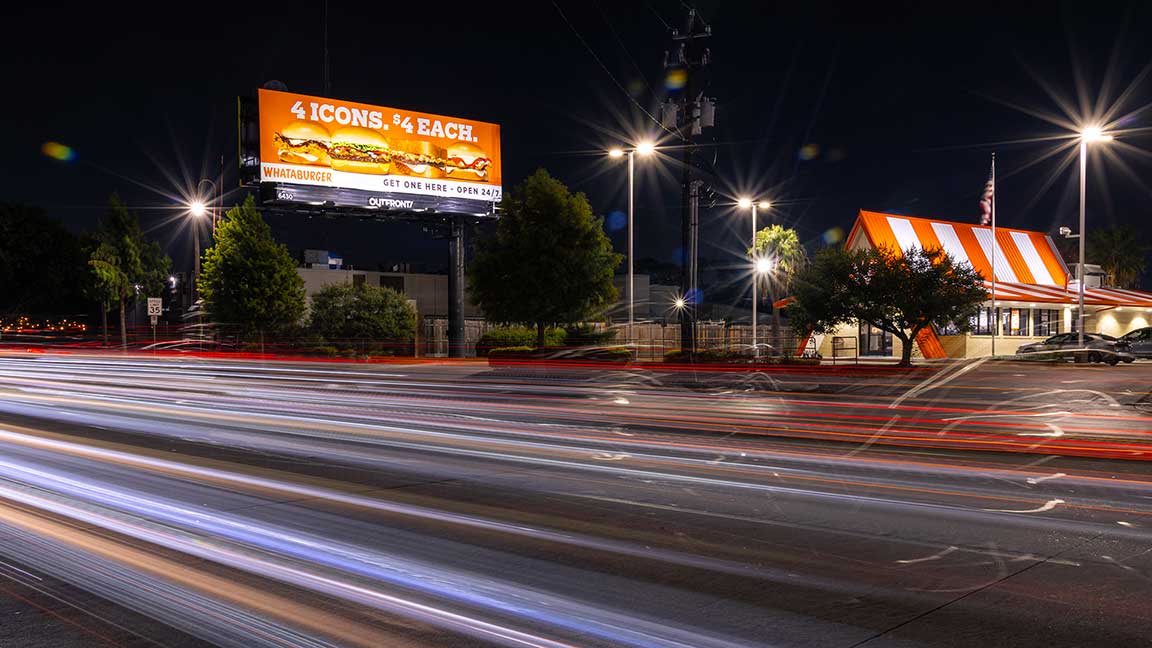
No matter how many modern marketers rediscover IRL media’s power to move, they’re not walking away from digital formats. The good news is, they don’t need to. Digital channels play a different role than out of home advertising. The Physical Layer can help brands get more out of them.
In real life, consumers discover brands. Online, those brands deliver targeted impressions.
In real life, ads are shared experiences. Online, they’re personalized messages.
In real life, culture is shaped. Online, it spreads.
The street-level storytelling possible on IRL media creates context for brands when encountered elsewhere. And at the end of the day, the foundation of legitimacy from the Physical Layer can help make advertising more credible, whether on TV, social media, or online.
Read the Kantar whitepaper, The IRL Advantage
Amidst a sea of AI slop, The IRL Advantage: The Role Physical Media Plays in an Agentic World is a blueprint for brands that want to break through. Want to learn more? Download the full report.
Author: Jay Fenster, Senior Manager, Content Marketing @ OUTFRONT
Links to third-party content are not endorsed by OUTFRONT Media. Past performance may not be indicative of future results. OUTFRONT does not guarantee specific results or outcomes.
Relevant OOH Content Straight To Your Inbox

Our First-Ever IRL Media Summit and All Other Things OUTFRONT at Advertising Week New York 2026

Here’s How OUTFRONT Connected in Real Life at Cannes Lions 2026

What’s Happening IRL? Five Essential Out of Home Advertising Trends for Late 2025

Billboards Are Just the Beginning – IRL Advertising Is All About the Experience